Explore Content
Articles, Podcasts, Infographics
Latest Articles
When we are investigating events, learning from frontline work, or trying to understand why something happened, we are not looking for agreement. We are looking for understanding.
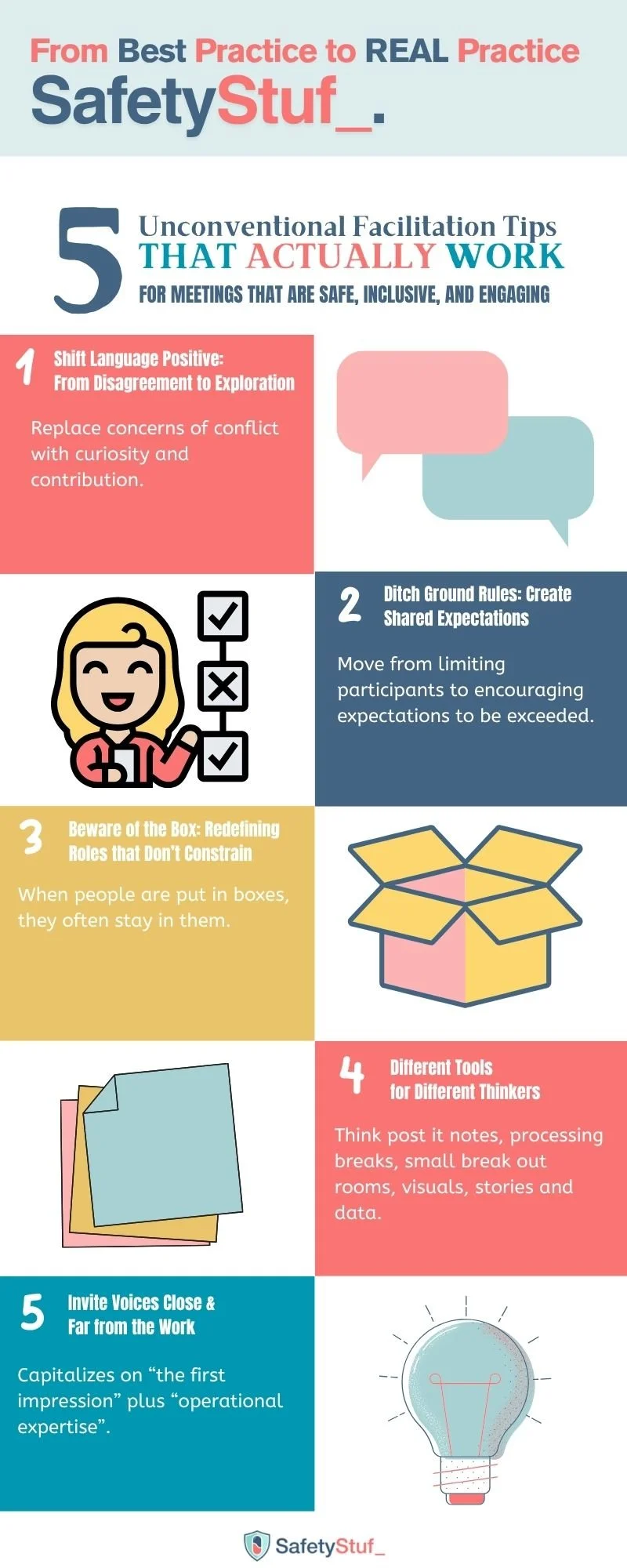
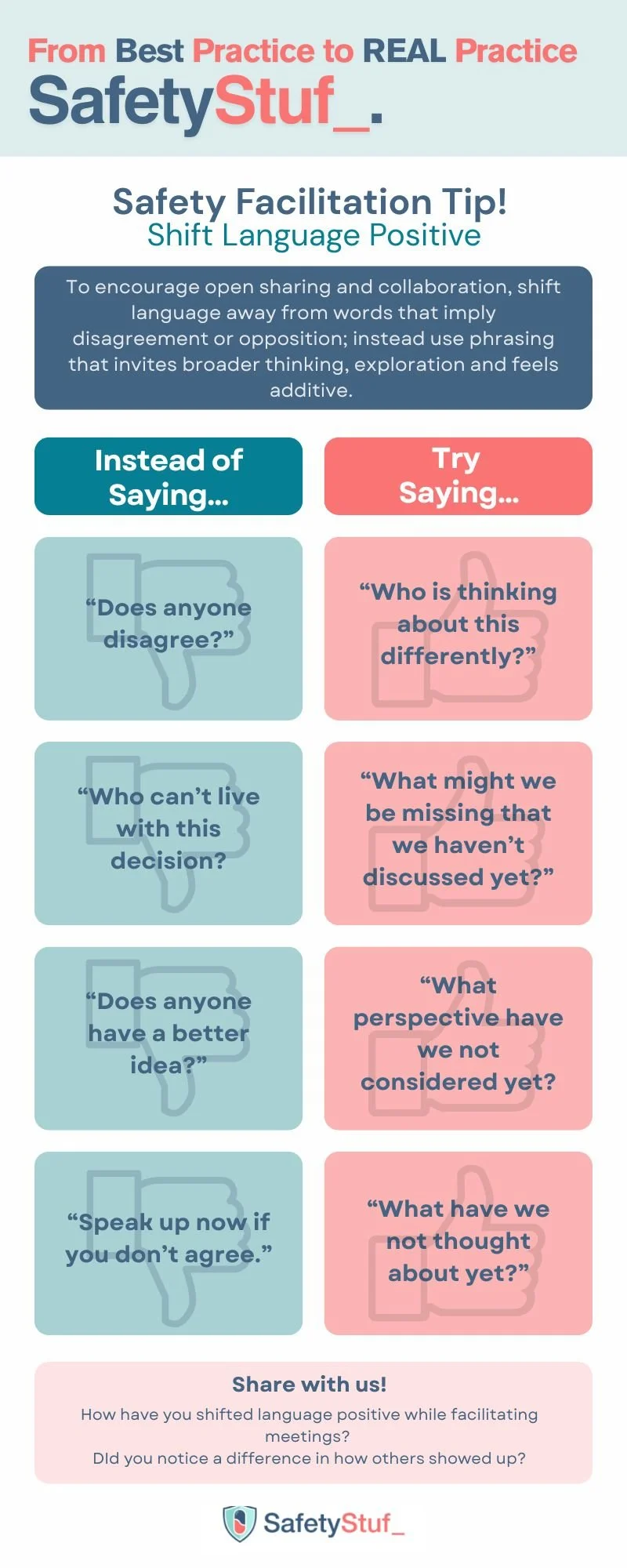
The language we use as facilitators shapes how people participate. Questions centered on disagreement can unintentionally discourage people from speaking up. Questions centered on exploration invite people to share what they know, even when their perspective differs from what has already been said.
It may seem like a small change in wording, but it can completely change the conversation.
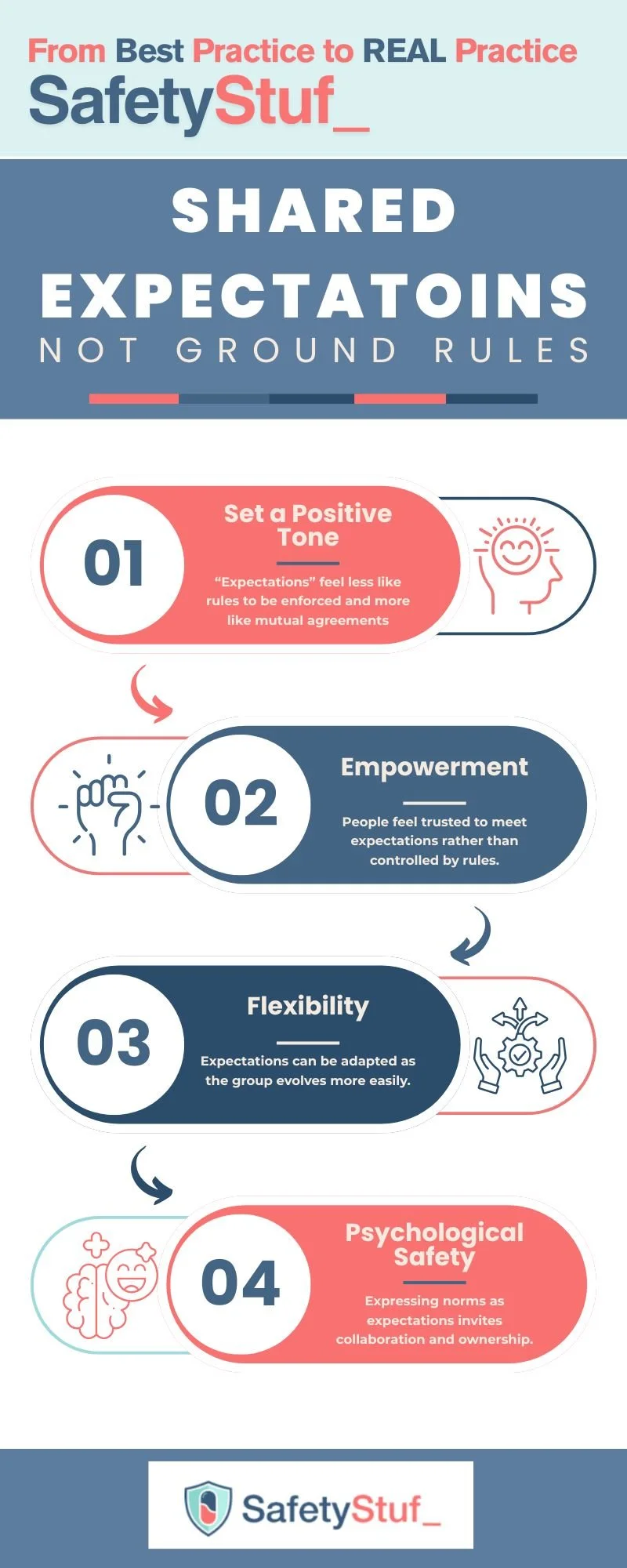
Ground rules are meant to create order and help everyone participate.
But in conversations about patient safety, learning, and improvement, the language of rules may unintentionally create the very conditions we are trying to avoid.
At Safety Stuf_, we believe it is time to make a simple but meaningful shift.
Replace ground rules with shared expectations.
It may seem like a small change in wording, but language shapes how people experience a conversation.
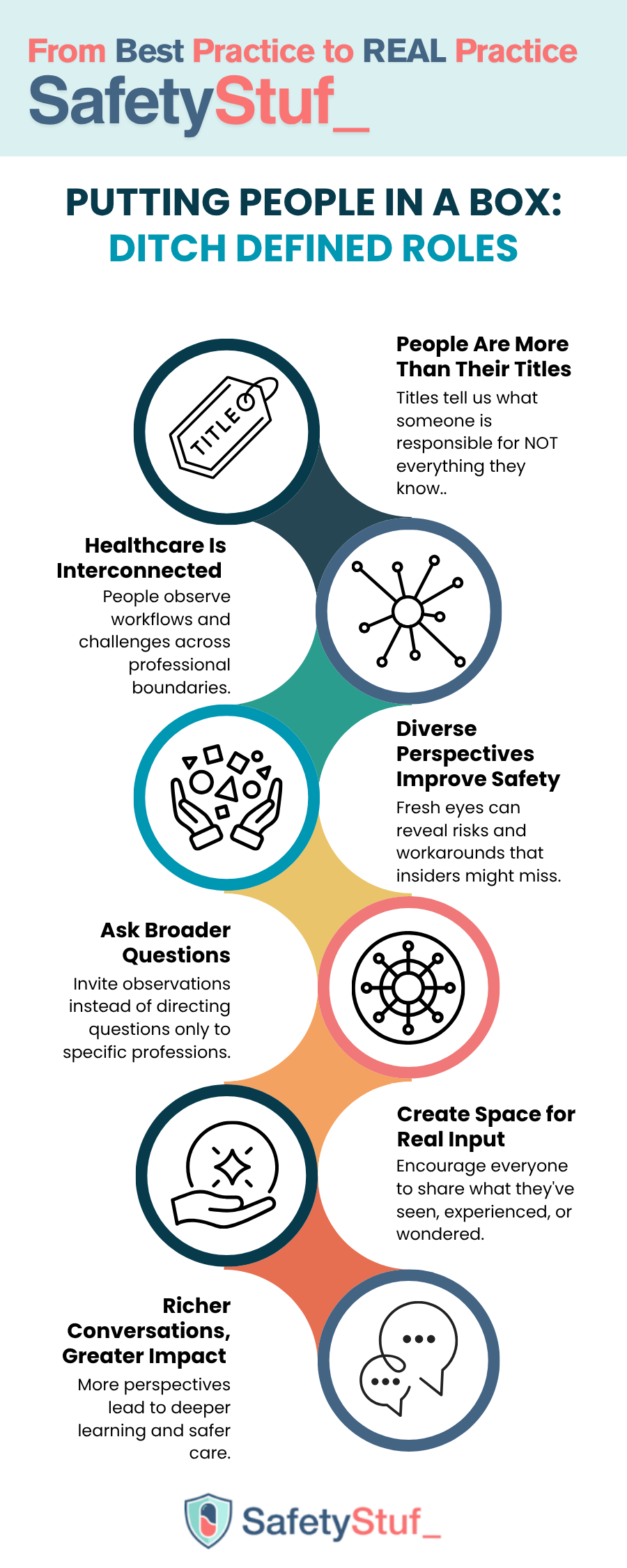
When our goal is learning, staying inside those boxes can unintentionally limit the conversation.
The people in the room are much more than the titles on their name badges.
Every person brings experiences, observations, relationships, and perspectives that extend well beyond their formal role. If we only invite people to speak from their job title, we miss valuable opportunities to understand how work actually happens.
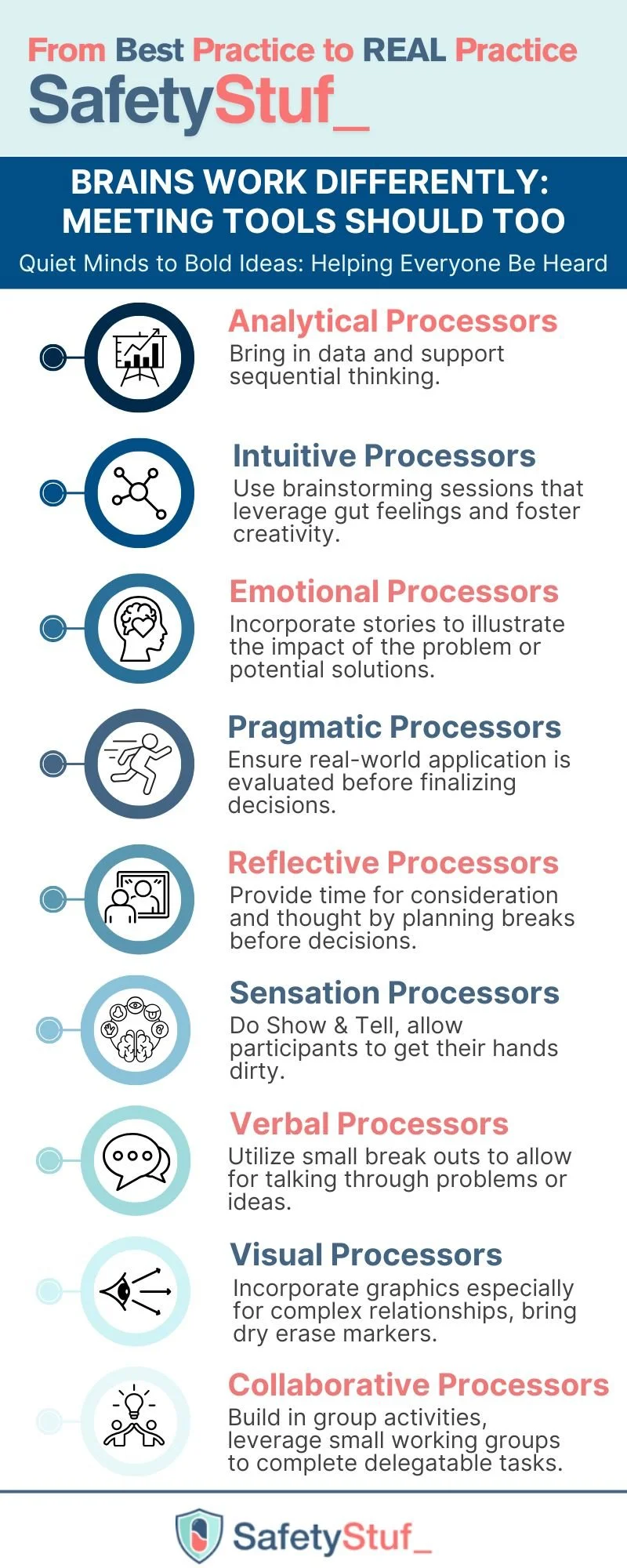
People process information differently, and expecting everyone to think, respond, and contribute through only one method can unintentionally silence valuable perspectives.
In patient safety conversations, where complexity and uncertainty are common, facilitators need to recognize different processing styles and use a variety of tools to engage the entire group.
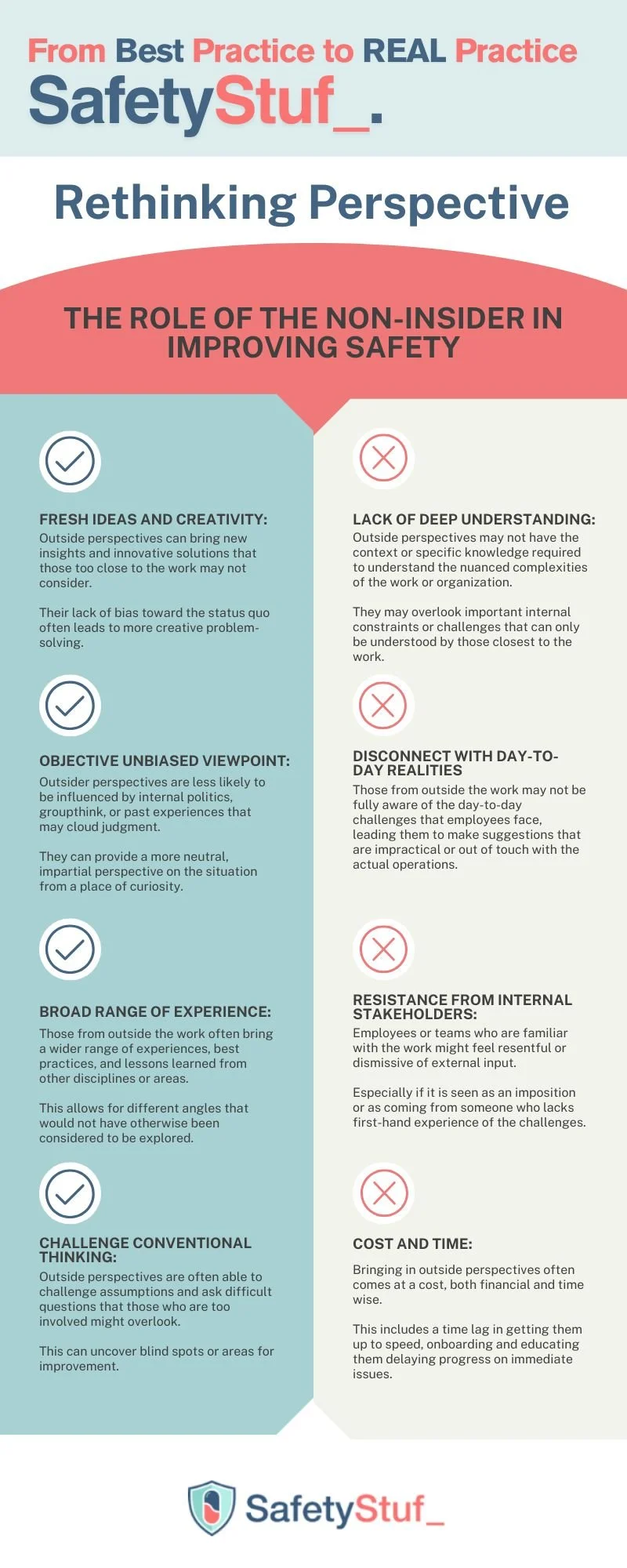
One of the most important decisions a facilitator makes happens before the conversation even begins: deciding who gets invited.
The SafetyStuf_ shift is to intentionally invite people both closer to and further from the work.
The people closest to the work help us understand what is actually happening.
The people further from the work help us see what we may be missing.
Both perspectives are necessary to create meaningful learning and improvement.
Featured Infographics
Podcast Episodes
Tractor Thoughts
Meetings exist to gather input, but people contribute differently. That difference isn’t a problem to fix; it’s something to understand. That’s where facilitation really matters.
Whether you're leading an event review, guiding a debrief after a difficult case, or bringing an interdisciplinary team together to solve a complex problem, your role is more than keeping the meeting on track. You're shaping how people experience the conversation.
And that matters.
The way we facilitate influences who speaks, who stays silent, what gets shared, and ultimately what we learn.